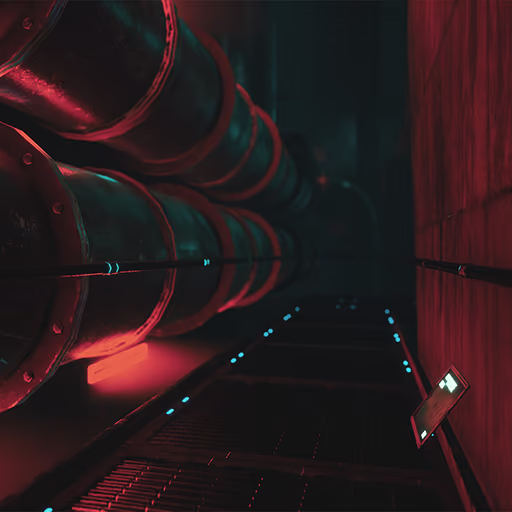
I don't usually start a level with platforms or blockout geometry. First I ask myself something else:
- what should the player remember after this level ends?
Obstacles aren't really the point. The point is the journey - curiosity, exploration, tension, that pull to see what's around the next corner. A vista that stops you in your tracks. A shortcut nobody told you about. Two mechanics you already know, combined in a way you didn't expect. Every choice I make should be in service of that.
Constraints bring out my best work, honestly. Hand me a handful of mechanics, a clear look, and a feeling you want the player to walk away with, and I'll find angles you probably haven't thought of. I'd rather dig deeper into what I already have than bolt on something new just to keep things feeling fresh - familiar systems, combined differently, usually get me further.
Same goes for how I work. First versions are rarely right, so I build small, test early, and let actual player behavior tell me what's working instead of guessing. If someone walks away remembering a path they found on their own, a fight they finally got through, or a view that made them stop - good. That's the job.
Even away from work I can't fully switch it off. I'll catch myself wondering why a moment in some random game stuck with me, or why my eyes went one way down a corridor instead of another. Studying that stuff is honestly about as fun as playing.
I'm still chasing that feeling - the one where a level ends and you're already thinking about it.