Diamond District
Designing handcrafted modules for procedural level generation.
Genre:
3D Platformer, Obstacle course
Development:
Jan - Apr 2025
About the Project
Diamond District was developed as a professional collaboration with Google Play, where players completed procedurally generated obstacle courses to earn limited-time UGC rewards. Instead of designing a single handcrafted level, the team set out to create a modular system capable of generating fresh experiences throughout the event.
Each playthrough combined a unique selection of handcrafted modules into a complete obstacle course, allowing the game to remain familiar while constantly presenting players with new layouts. The challenge wasn't simply creating fun obstacles—it was designing modules that worked both individually and as part of a much larger system.
The Challenge
The event lasted four weeks, meaning players would return regularly expecting the experience to feel fresh. Building a brand-new obstacle course every week wasn't a realistic production solution. Instead, we asked a different question:
How could we create hundreds of unique obstacle courses without constantly building new ones?
The answer was to design a modular generation system. Rather than creating complete levels, we built a library of handcrafted gameplay modules that could be combined into new obstacle courses every time a player started a run.
Building the System
Procedural generation only works when every piece follows the same design language. Every module had to connect seamlessly to the next, regardless of where it appeared in the generated tower.
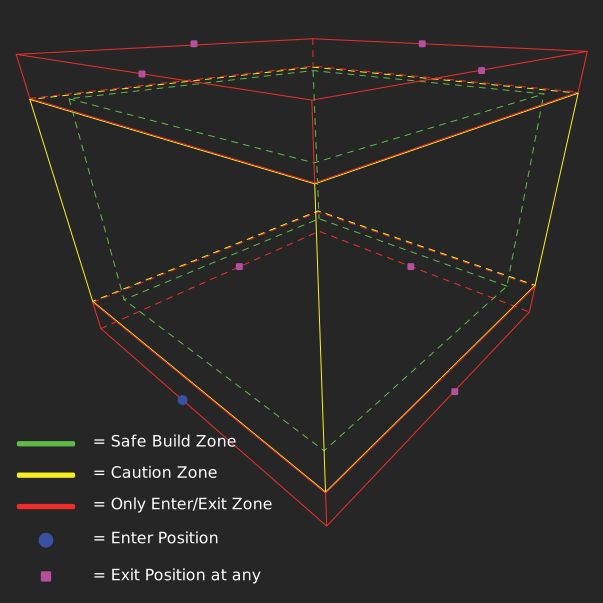
Together with the Game Designer and one of our programmers, I helped establish the rules that made this possible—standardized dimensions, connection points, safe building zones, and collision boundaries to ensure modules could be combined without creating broken layouts or trapping players.
These constraints became the foundation of the entire system. Rather than limiting creativity, they allowed us to design independently while knowing every module would function as part of a much larger whole.
Designing for Variety
How do you make over forty handcrafted modules feel distinct without introducing new mechanics every time?
Designing a procedural system meant every module had to be enjoyable regardless of when it appeared during a run. Since modules could be combined in hundreds of different ways, I couldn't rely on carefully scripted pacing or fixed progression - each piece needed its own identity while remaining flexible enough to work alongside every other module.
Instead of constantly introducing new mechanics, I focused on exploring the full potential of the ones we already had. By combining familiar mechanics in different ways - varying timing, movement, verticality, and player decision-making - each module could offer a distinct challenge without increasing mechanical complexity.
The result was a library of gameplay modules that remained recognizable on their own while contributing to a constantly changing overall experience.
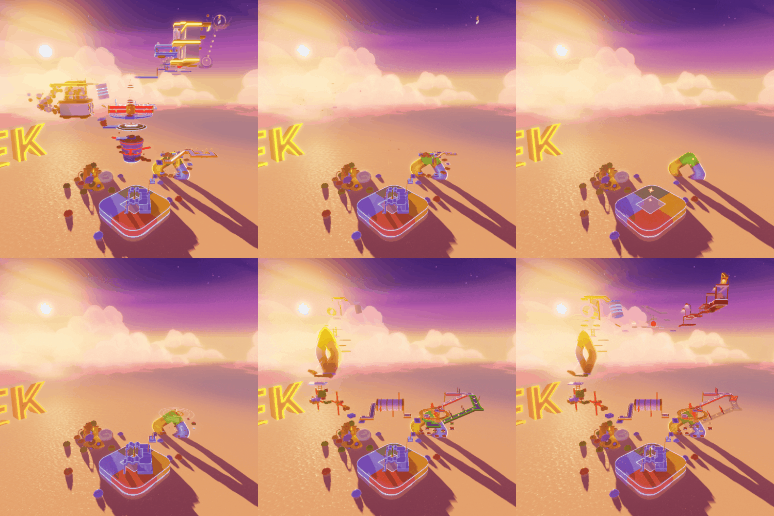
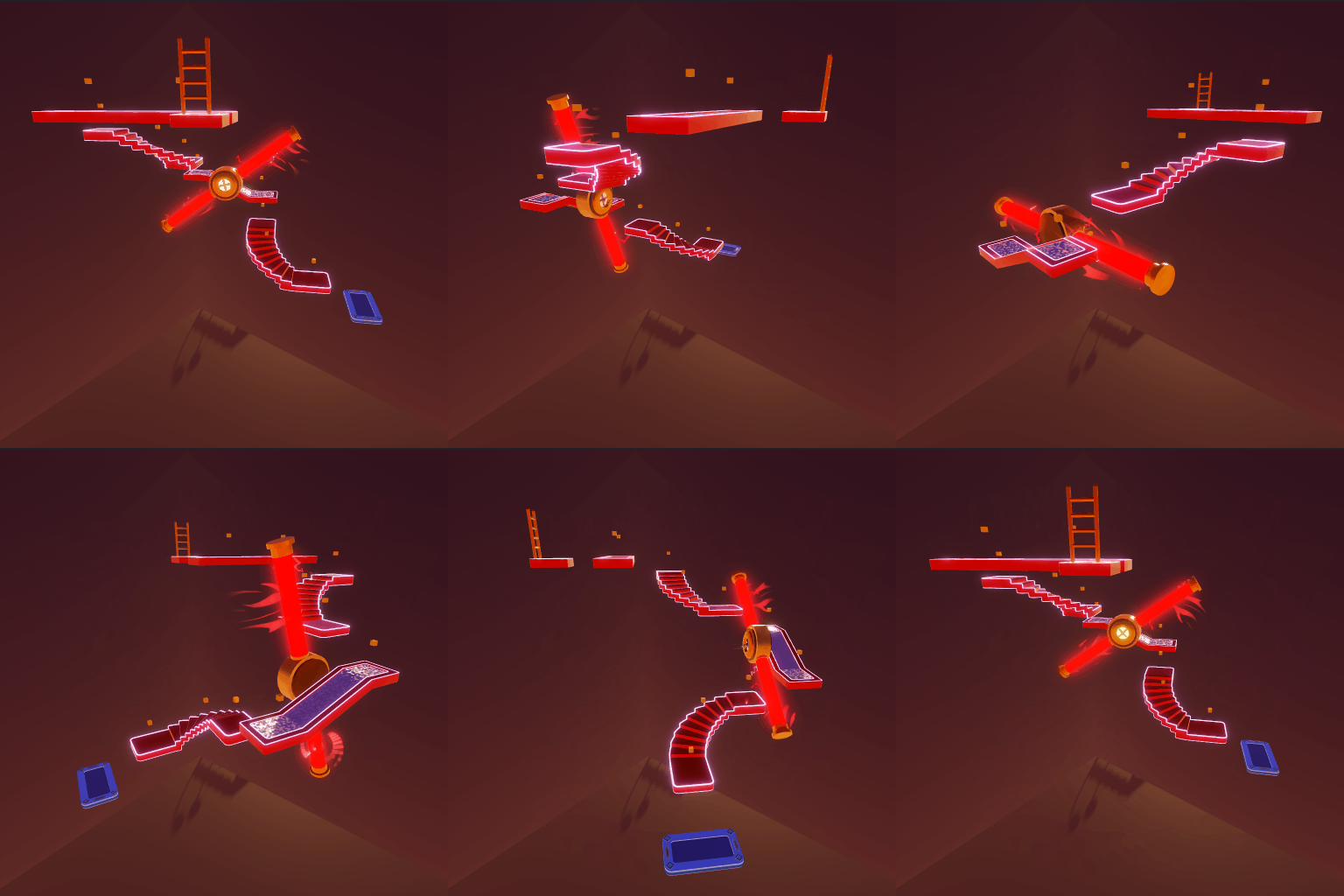
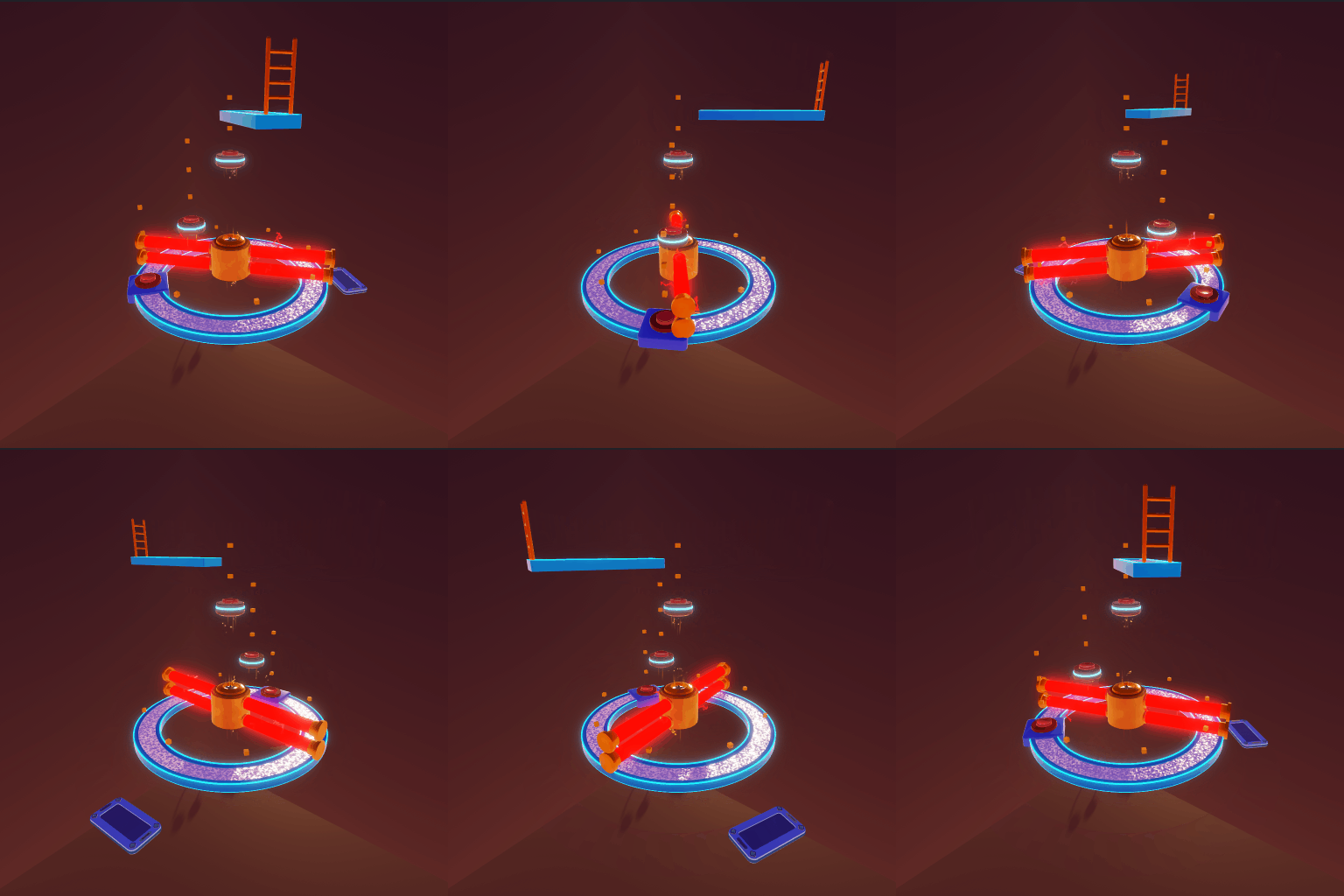
Same rotating hazard reused with a traversal path (left) vs. combined with a ring platform and stacked collectibles (right)
Same rotating hazard reused with a traversal path (top) vs. combined with a ring platform and stacked collectibles (bottom)
From Quantity to Quality
One of the biggest challenges wasn't simply producing a large number of modules - it was ensuring they continued to feel distinct even after dozens of playthroughs. As the library grew, it became increasingly important to avoid repeating the same gameplay ideas in different forms.
This encouraged me to continually question my own designs. Could an existing mechanic be presented from a different angle? Could a familiar challenge become something new through timing, player choice or environmental context? Rather than chasing entirely new mechanics, I found greater value in exploring the depth of the systems we already had.
Production
Building a modular system required more than level design.
Although my primary responsibility was designing gameplay modules, much of the project's success came from close collaboration across disciplines. The procedural generation system was shaped through continuous discussions between Level Design, Game Design and Programming, where technical limitations and gameplay goals constantly influenced one another.Rather than designing in isolation, I worked closely with the team to define the rules that every module would follow. As development progressed, I also supported playtesting, provided feedback to the junior Level Designer, and helped the art team with set dressing and collision polish to ensure the final experience remained both visually consistent and enjoyable to play.Working within a multidisciplinary team reinforced the importance of communication and shared ownership. A strong modular system wasn't created by one discipline alone—it emerged through constant iteration between design, art and engineering.
Looking Back
Diamond District fundamentally changed the way I think about scalable level design.
Before this project, I primarily focused on crafting individual player experiences. Diamond District challenged me to think one level higher—not just about designing great gameplay, but about designing systems capable of producing great gameplay repeatedly. That shift paid off: the system shipped to 5.1 million visits with an 85.3% rating, proof that a well-designed set of rules can generate consistently good player experiences again and again, not just once.
One of the most unexpected lessons was discovering how quickly creativity can become exhausted when producing a large volume of content under tight deadlines. Designing more than forty gameplay modules in just a few weeks pushed me to develop a more structured creative process, rely more heavily on iteration, and learn when to step away before returning with fresh eyes.
Most importantly, the project reinforced something I still carry with me today: strong constraints don't limit creativity—they give it direction. The clearer the design rules became, the more freedom I had to focus on creating memorable gameplay within them.
Great procedural systems aren't built by randomness alone—they're built on carefully handcrafted design.